






Son-O-House
interactive sounding architecture
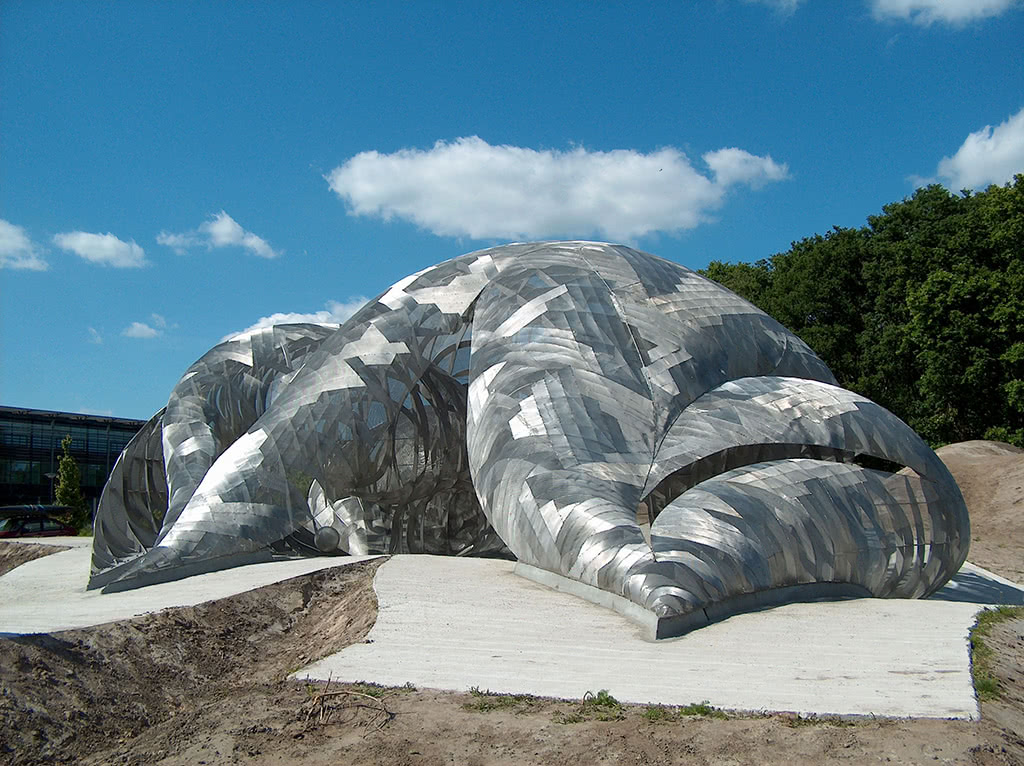
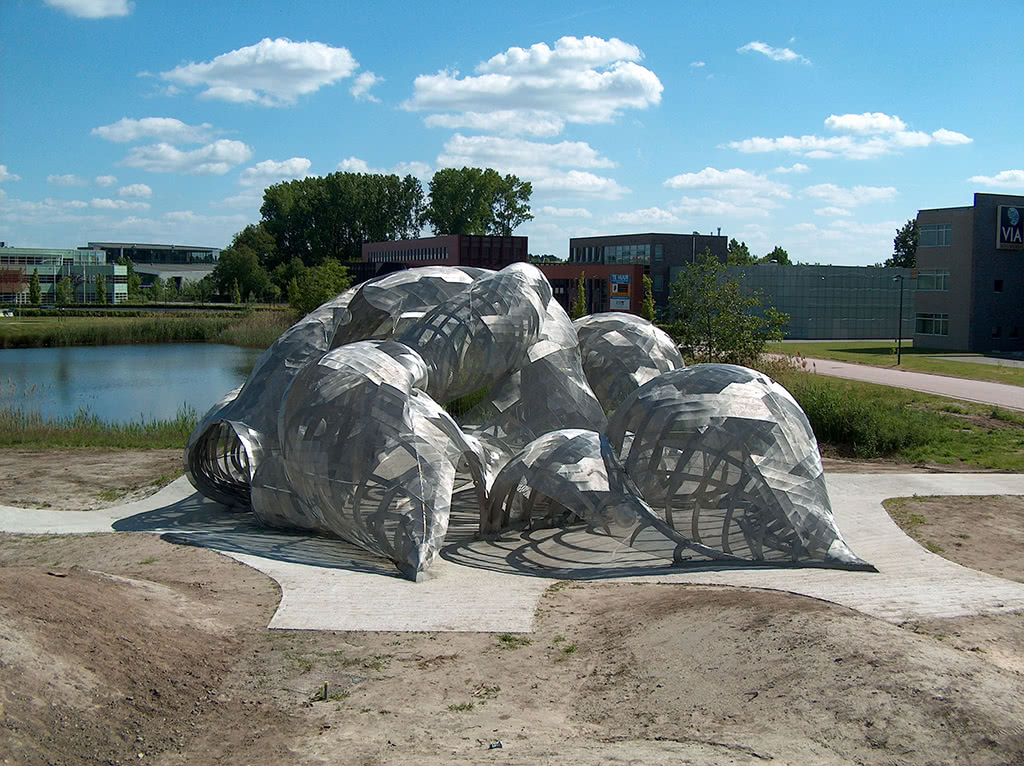
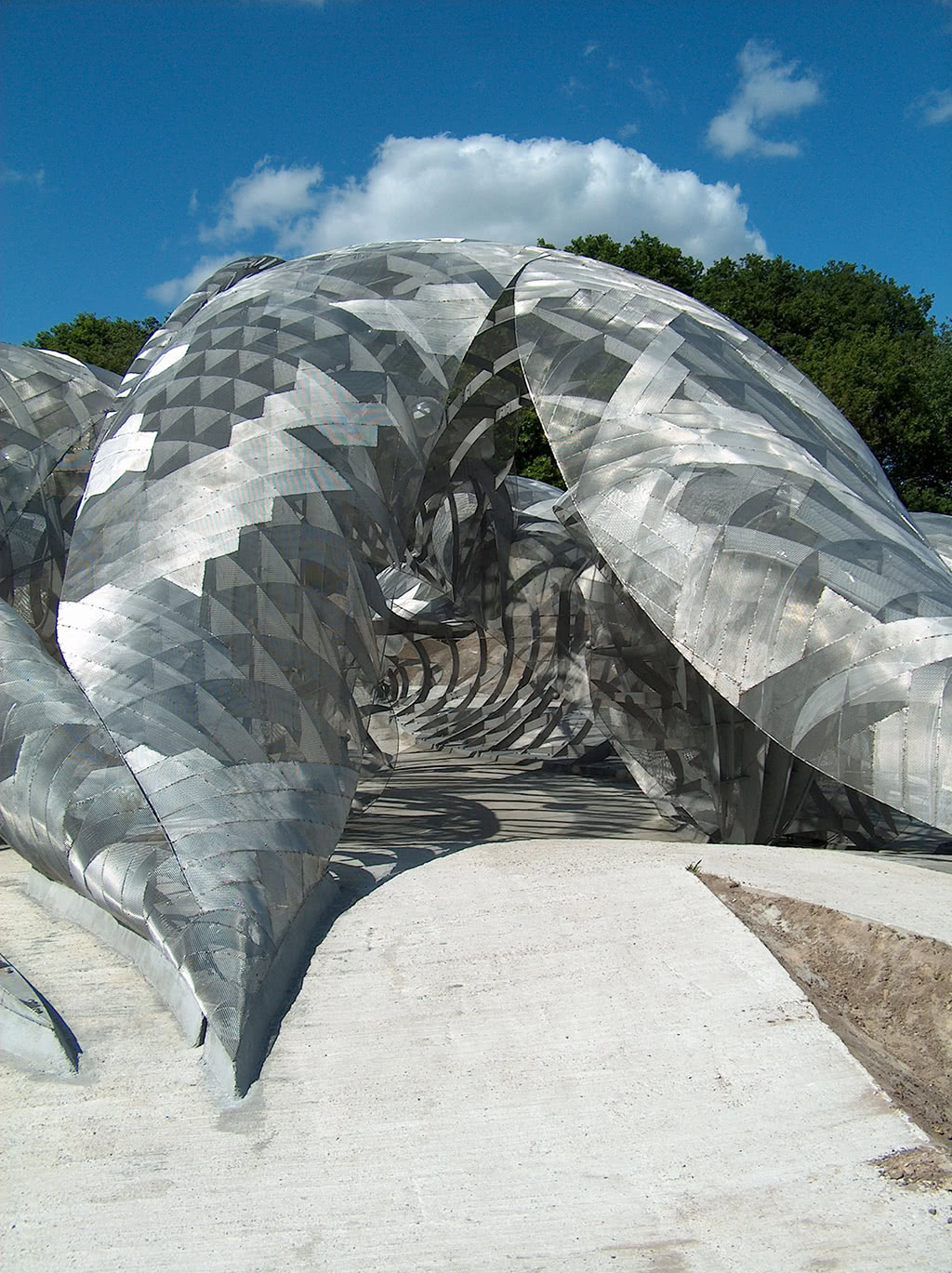
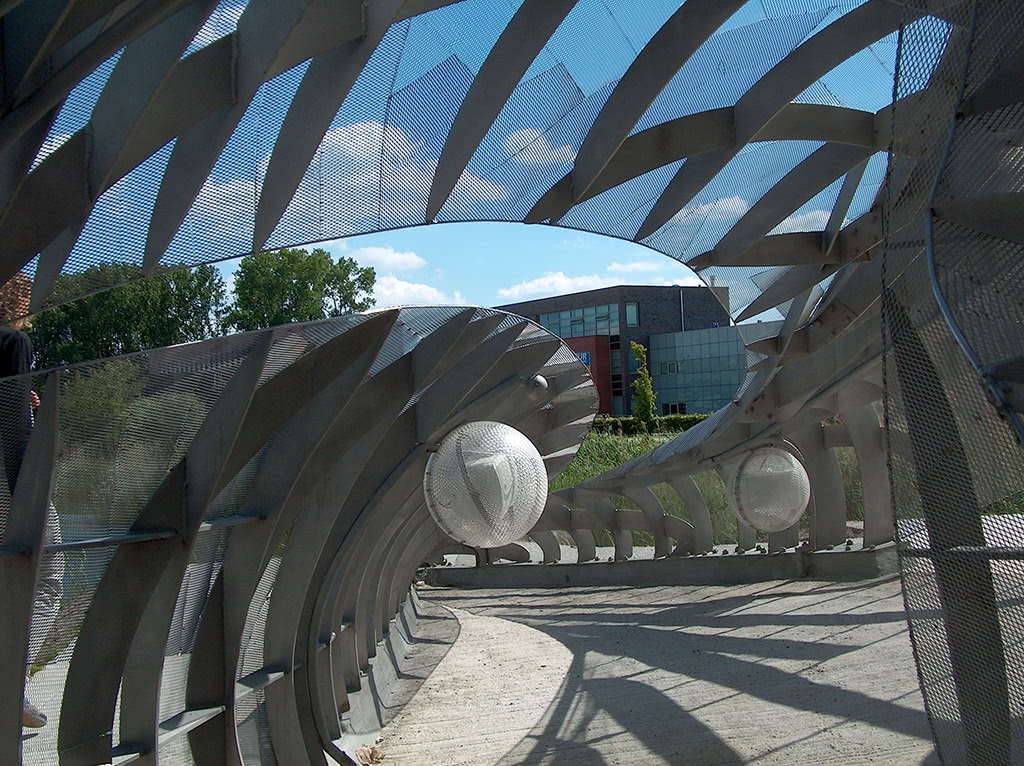
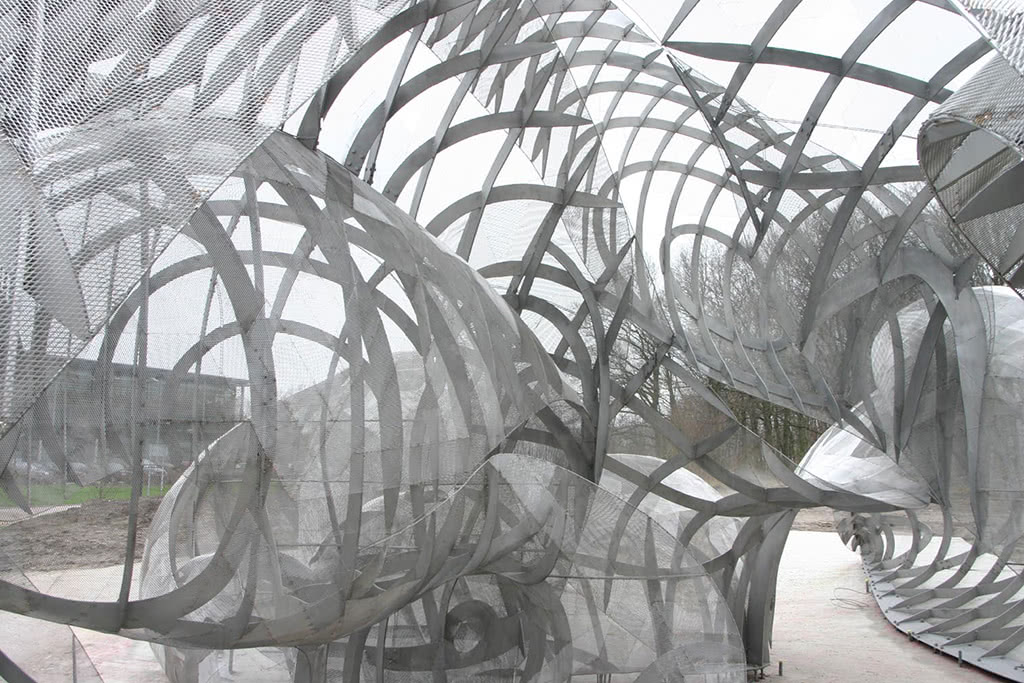
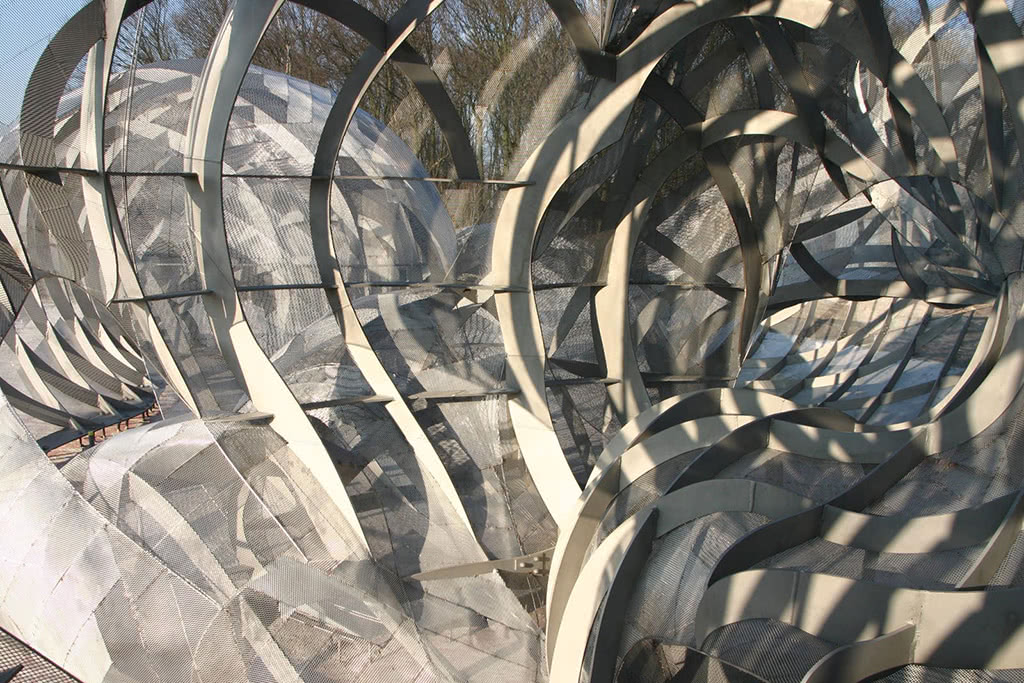
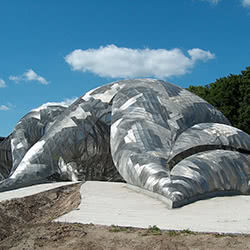
Son-O-House is 'a house where sounds live': not a 'real' house, but a structure that refers to living and the bodily movements that accompany habit and habitation. Son-O-House is an architectural environment and an interactive sound installation in one. The work continuously generates new sound patterns, activated by sensors that pick up the actual movements of visitors.
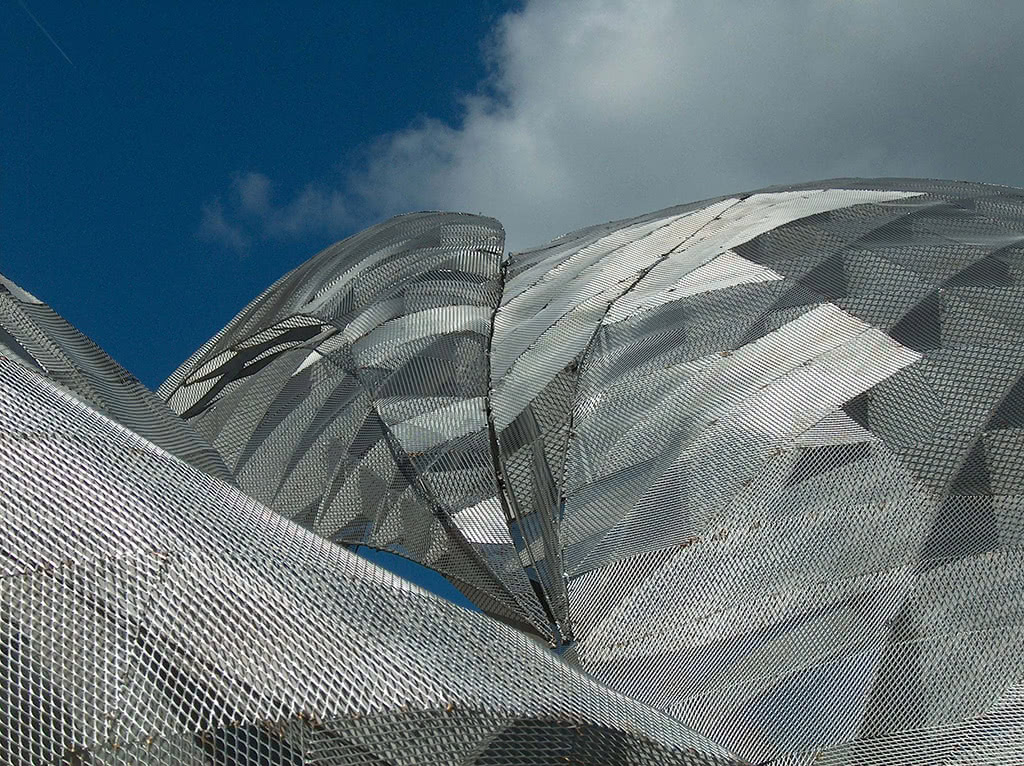
The structure derives from a carefully choreographed set of movements of bodies, limbs and hands (on three scales) that are inscribed on paper bands as cuts (an uncut area corresponds with bodily movement, a first cut through the middle corresponds with limbs, finer cuts correspond with hands and feet). These pre-informed paper bands are then stapled together and the curves directly follow from that. What we then have is an arabesque of complex intertwining lines (white paper model); we only have to sweep these lines sideways to make it into a three-dimensional porous structure (purple paper model). The analogue computing model is then digitised and remodelled on the basis of combing and curling rules resulting in a very complex model of interlacing vaults that sometimes lean on each other and sometimes cut into each other.
Twenty-three sensors are positioned at strategic spots to indirectly influence the music. The sound generation system is based on spatial interferences and dynamic standing wave patterns resulting from the combination of speakers. As a visitor (slowly becoming an inhabitant because this structure will stay in its place forever) one does not influence the sound directly, as is so often the case with interactive art. One influences the landscape itself that generates the sounds. The score is an evolutionary memoryscape that develops with the traced behaviour of the actual bodies in the space.
General
The Son-O-House has a generative and reactive sound environment. The aim of this environment is to create a permanent interaction between the sound, the architecture and the visitors. The sound intends to influence and interfere with the perception and the movements of the visitors. The presence, activity and approximate location of the visitors are detected by sensors placed in the building. This information is continuously analysed and quantified. The output of the analysis is used to control the nature of the sound and therefore challenges the visitors to re-interpret their relationship with the environment. The result is a complex feedback system in which the visitor becomes a participant.
The Sound Environment
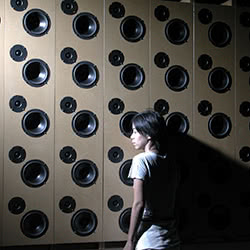
The Son-O-House is equipped with 20 speakers. They can be used in two different ways. First, they can all be used individually. The sounds will be clearly perceived from the direction of the corresponding speaker. With the second approach the 20 speakers are divided into five overlapping 'sound fields'. Each field consists of 4 individual speakers. The sounds produced by the speakers are designed in such a way that they interfere with each other in the space. Therefore, the sounds are not perceived from the location of the individual speakers but surround the visitors in the space. The interferences of the sounds produced by the speakers in one field can either be static or dynamic, resulting in movement in the space. All of the sound is synthesised in real-time.
Composition
The sound environment of the Son-O-House is not a musical composition in the traditional sense. The goal is a continuously developing environment that challenges visitors to come back, perceive the new musical state, and relate to and interact with it again. For the opening of the building the sound environment does not contain any prepared sounds. The system consists of rules and conditions that produce parameters of the sounds. The system therefore generates its own sounds in real time. The sound fields transform within themselves depending on the activity of the visitors inside the field. On a higher level of composition the sound fields can be swapped with each other in space and time.
The effect of a current sound can be measured by using the sensor input to analyse the relation of one location to another location. The results are stored in a growing database. Previously generated sounds can be re-used in the future in new combinations.
Sensors
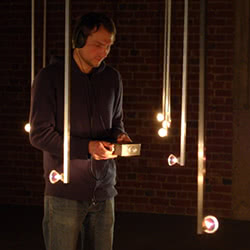
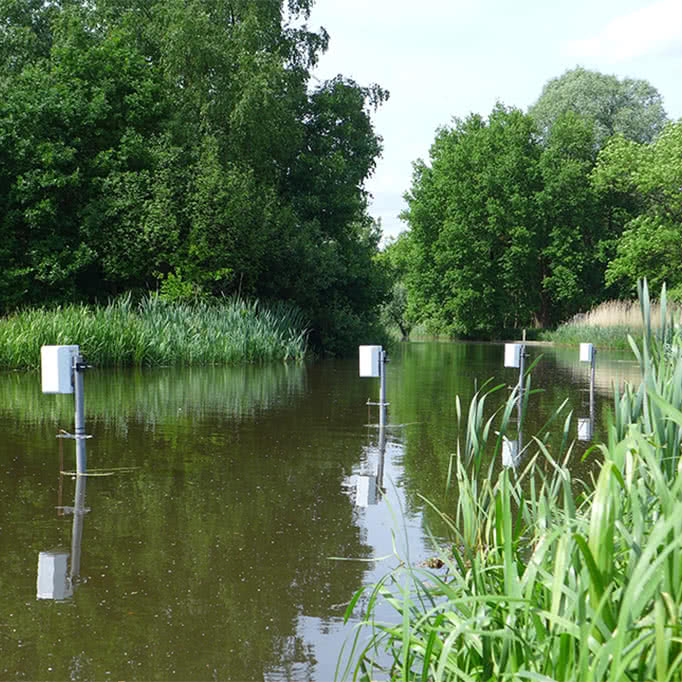
Twenty-three sensors are spread over the building. They are meant to detect the movements of the visitors from one location to another location. The sensors do not sense position very precisely but are meant to generate statistical information about the visitors. The result is a measurement that creates distribution maps of the activity of the visitors over the building. This information is used to influence the sound. The more activity in one location, the faster the sounds transform in that region. At the same time, the system tries to attract visitors to the opposite locations or 'push' them away from the current location.
The visitors leave their traces in the building because of their interaction with the architecture and the sound. The nature of the sound is based on interference. The sound environment as a whole attempts to interfere with the architecture.
Credits
| architecture: | NOX / Lars Spuybroek |
| interactive sound environment: | Edwin van der Heide |
| keywords: | sound art, interactive sound installation, interactive architecture, sounding architecture, generative composition, spatial sound, multi-channel audio, sensors, movement, body, habitation, NOX, Lars Spuybroek, Son en Breugel |
Installations and lectures
Installations 1
| 2004 | |
|---|---|
| 2004–2009 | Son en Breugel, the Netherlandspermanent installation, opened in 2004 and in full operation until 2009 |
Lectures 1
| 2016 | |
|---|---|
| 29 and 30 November | Son-O-House, Spectral Diffractions and Schwingungen – SchwebungenConference – The Role and Position of Sounds and Sounding Art in Public Urban Environments, Academy for Creative and Performing Arts, Leiden University, Leiden, the Netherlands |