







Son-O-House
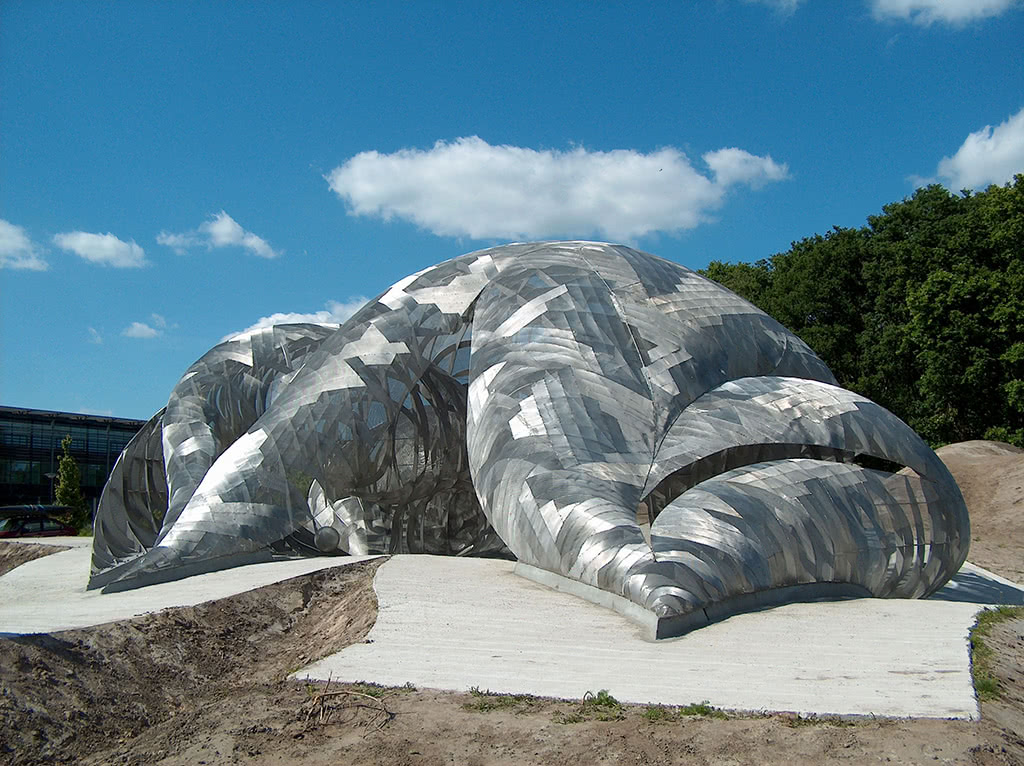
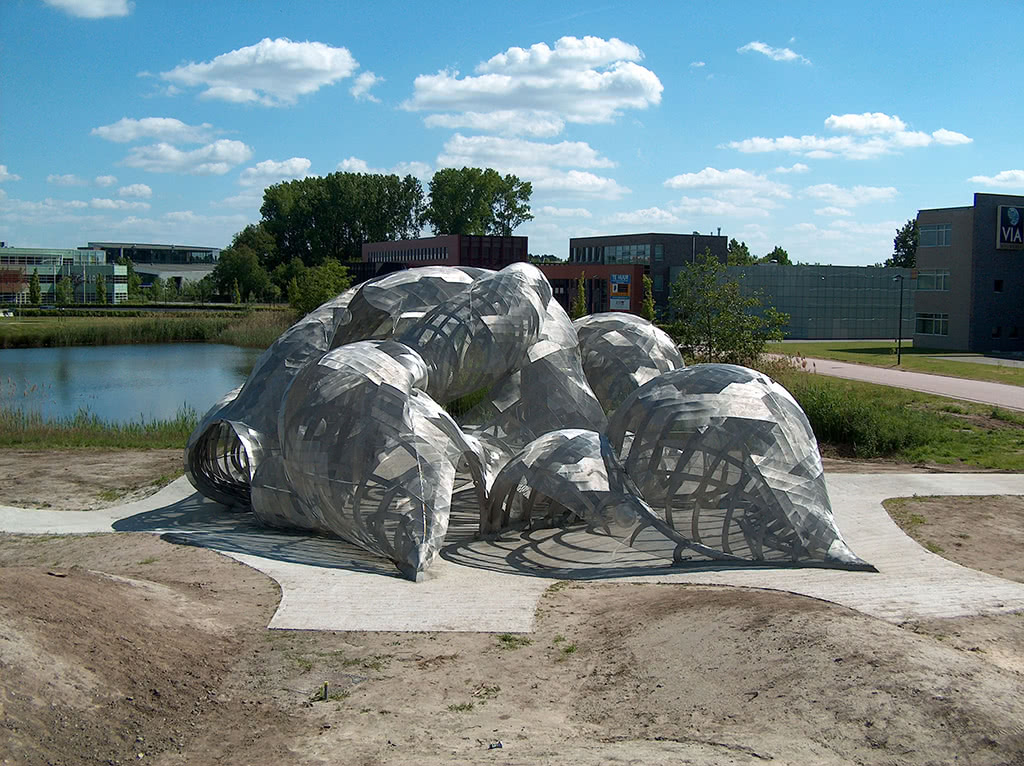
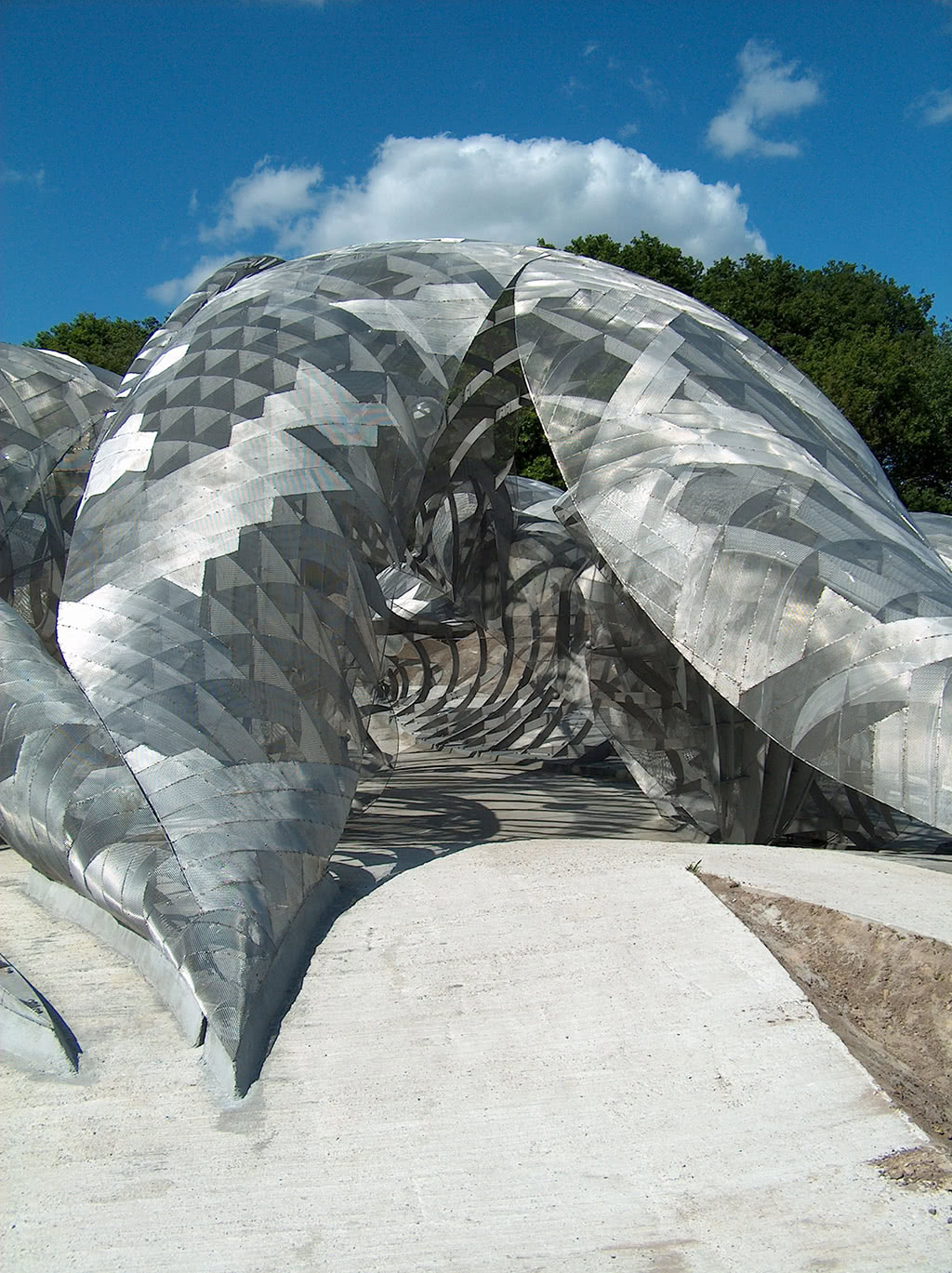
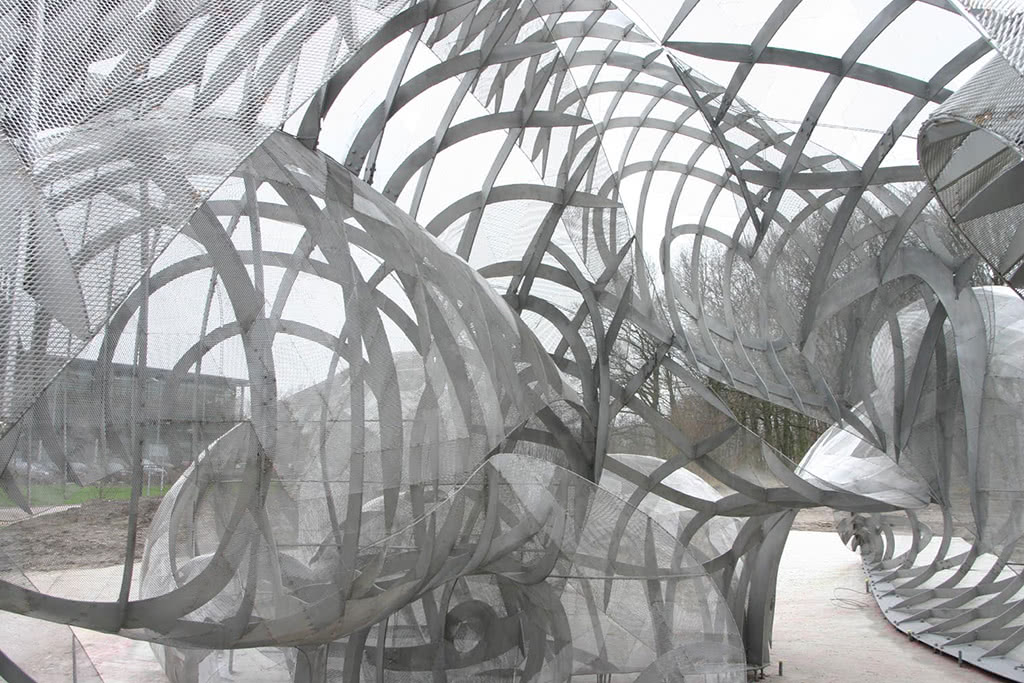
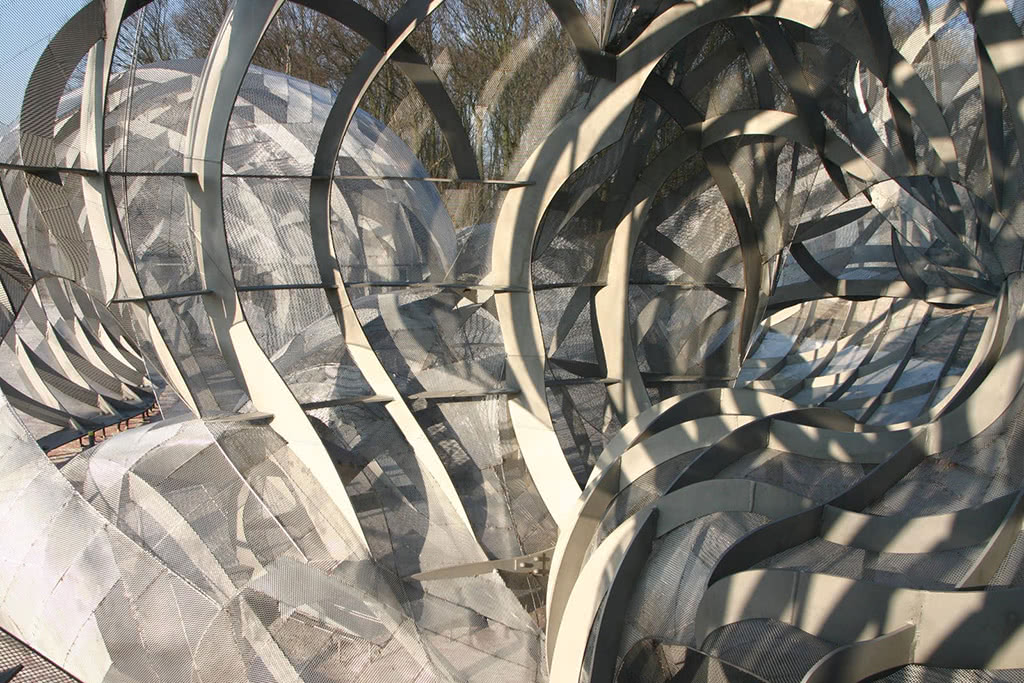
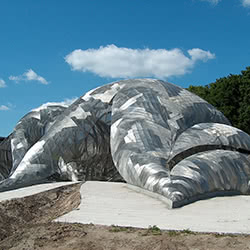
Son-O-house is "a house where sounds live", not being a 'real' house, but a structure that refers to living and the bodily movements that accompany habit and habitation. Son-O-House is an architectural environment and an interactive sound installation in one. The work is continuously generating new sound patterns activated by sensors picking up actual movements of visitors.
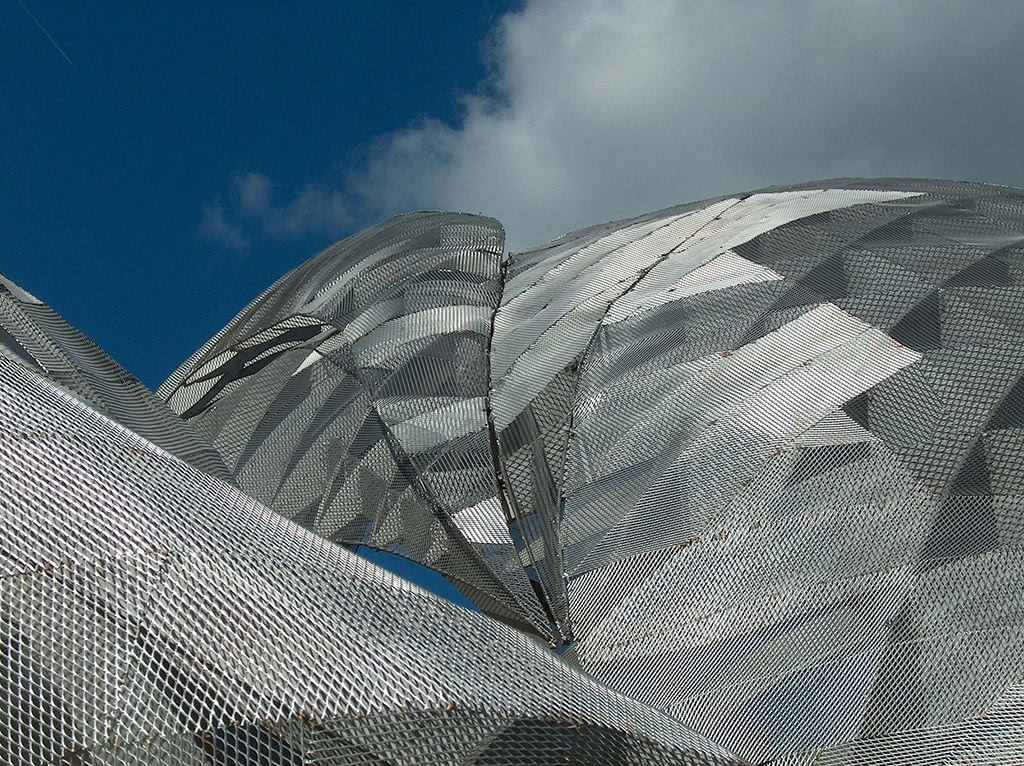
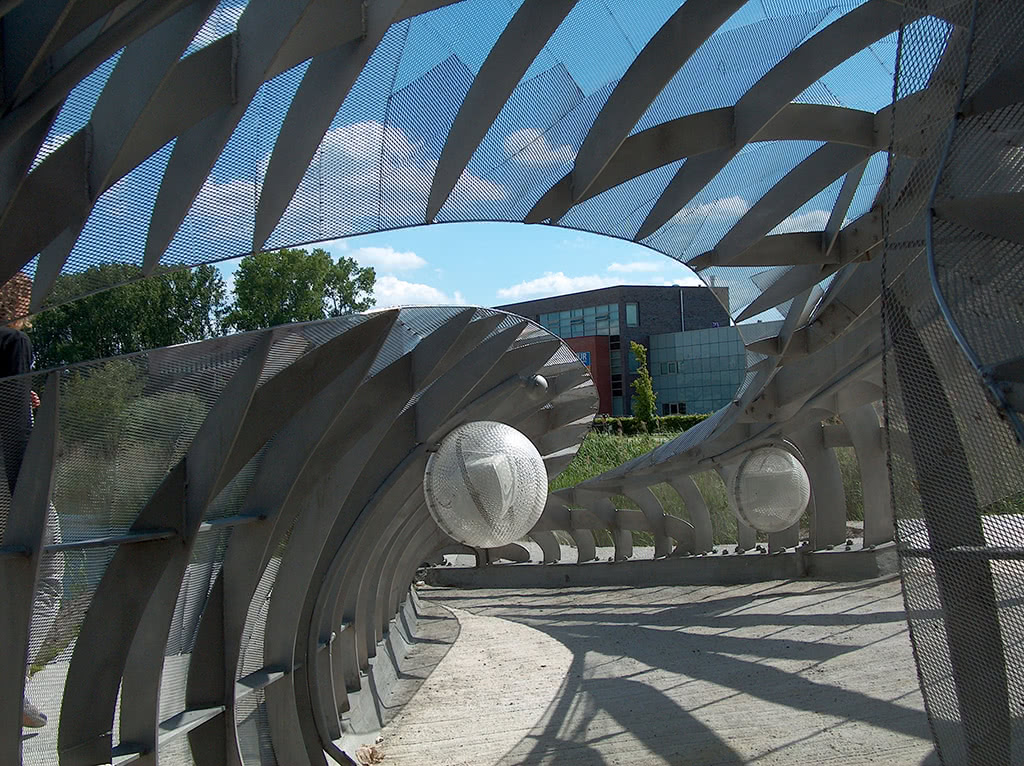
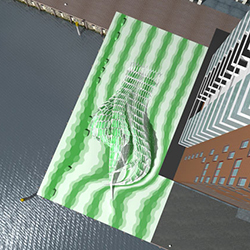
The structure derives from a carefully choreographed set of movements of bodies, limbs and hands (on three scales) that are inscribed on paper bands as cuts (an uncut area corresponds with bodily movement, a first cut through the middle corresponds with limbs, finer cuts correspond with hands and feet). These pre-informed paper bands are then stapled together and the curves directly follow from that. What we then have is an arabesque of complex intertwining lines (white paper model); we only have to sweep these lines sideways to make it into a three-dimensional porous structure (purple paper model). The analog computing model is then digitized and remodeled on the basis of combing and curling rules which results in the very complex model of interlacing vaults which sometimes lean on each other or sometimes cut into each other.
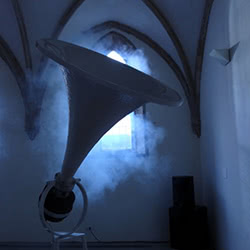
Twenty three sensors are positioned at strategic spots to indirectly influence the music. The sound generation system is based on spatial interferences and dynamic standing wave patterns resulting from the combination of speakers. As a visitor (slowly becoming an inhabitant because this structure will stay in its place forever) one does not influence the sound directly, which is so often the case with interactive art. One influences the landscape itself that generates the sounds. The score is an evolutionary memoryscape that develops with the traced behavior of the actual bodies in the space.
General
The Son-O-House's has a generative and reactive sound environment. The aim of this environment
is to create a permanent interaction between the sound, the architecture and the visitors. The
sound intents to influence and interfere with the perception and the movements of the visitors.
The presence, activity and the approximate location of the visitors is being detected by sensors
placed in the building. This information is continuously analyzed and quantified. The output of
the analysis is used to control the nature of the sound and therefore challenges the visitors to
re-interpret their relationship with the environment. The result is a complex feedback system in
which the visitor becomes a participant.
The Sound Environment
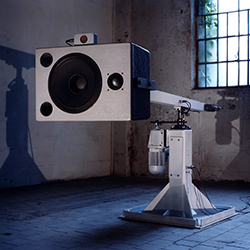
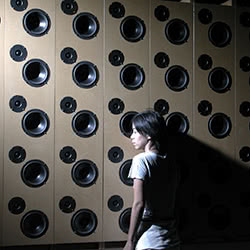
The Son-O-House is equipped with 20 speakers. They can be be used with two different approaches.
First of all they can all be used individually. The sounds will be clearly perceived from the
direction of the corresponding speaker. With the second approach the 20 speakers are divided in
five overlapping 'sound fields'. Each field consists of 4 individual speakers. The sounds
produced by the speakers are designed in such a way that they interfere with each other in the
space. Therefore the sounds are not perceived from the location of the individual speakers but
surround the visitors in the space. The interferences of the sounds produced by the speakers in
one field can either be static or dynamic resulting in movement in the space. All of the sound
is synthesized in real-time.
Composition
The sound environment of the Son-O-House is not a musical composition in the traditional sense.
The goal is to have a continuous developing environment that challenges the visitors to come
back, perceive the new musical state and then relate and interact themselves with it again.
For the opening of the building the sound environment doesn't contain any prepared sounds. The
system consists of rules and conditions that produce parameters of the sounds. The system is
therefore generating it's own sounds in real-time. The sound fields transform within themselves
depending on the activity of the visitors inside of the field. On a higher level of composition
the sounds fields can be swapped with each other in space and time.
The effect of a current sound can be measured by using the sensor input and analyze the relation
of one location to another location. The results are stored in a growing data base. Previously
generated sounds can be re-used in the future in new combinations.
Sensors
Twenty three sensors are spread over the building. They are meant to detect the movements of the
visitors from one location to another location. The sensors are not doing a very precise
position sensing but are meant to generate statistical information about the visitors. The
result in a measurement that creates distribution maps of the activity of the visitors over the
building. This information is used to influence the sound. The more activity on one location the
faster the sounds transform in that region. On the other hand the system will try to attract the
visitors to visit the opposite locations or 'push' them away from the current location.
The visitors leave their traces in the building because of there interaction with the architecture and the sound. The nature of the sound is based on interference. The sound environment as a whole attempts to interfere with the architecture.
| architecture: | NOX / Lars Spuybroek |
| interactive sound environment: | Edwin van der Heide |