








Pneumatic Sound Field
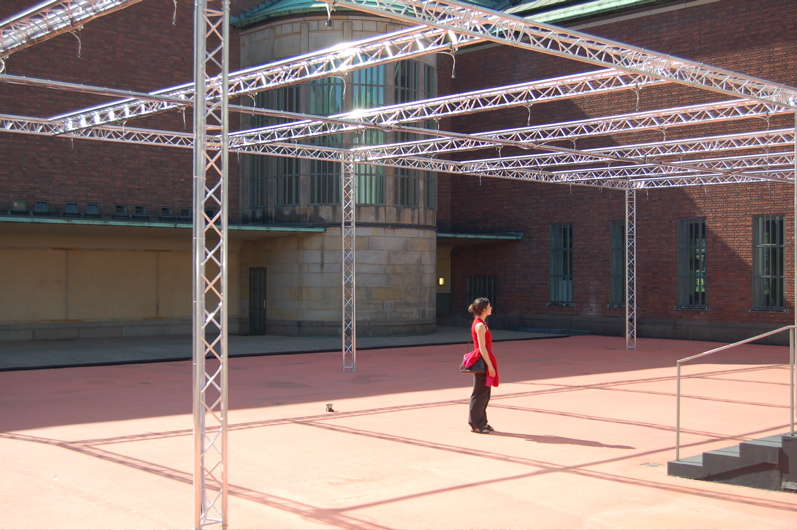
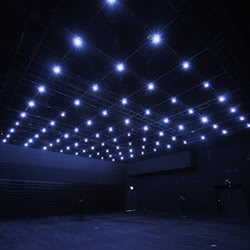
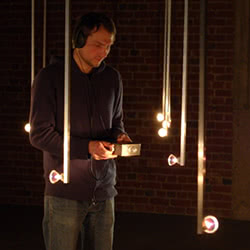
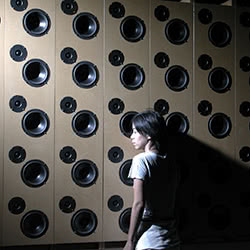
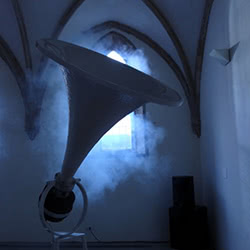
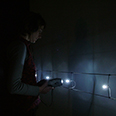
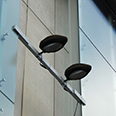
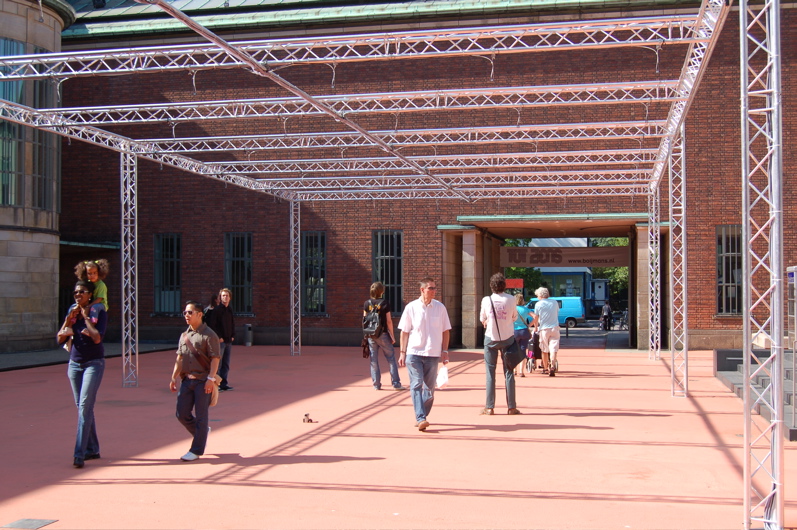
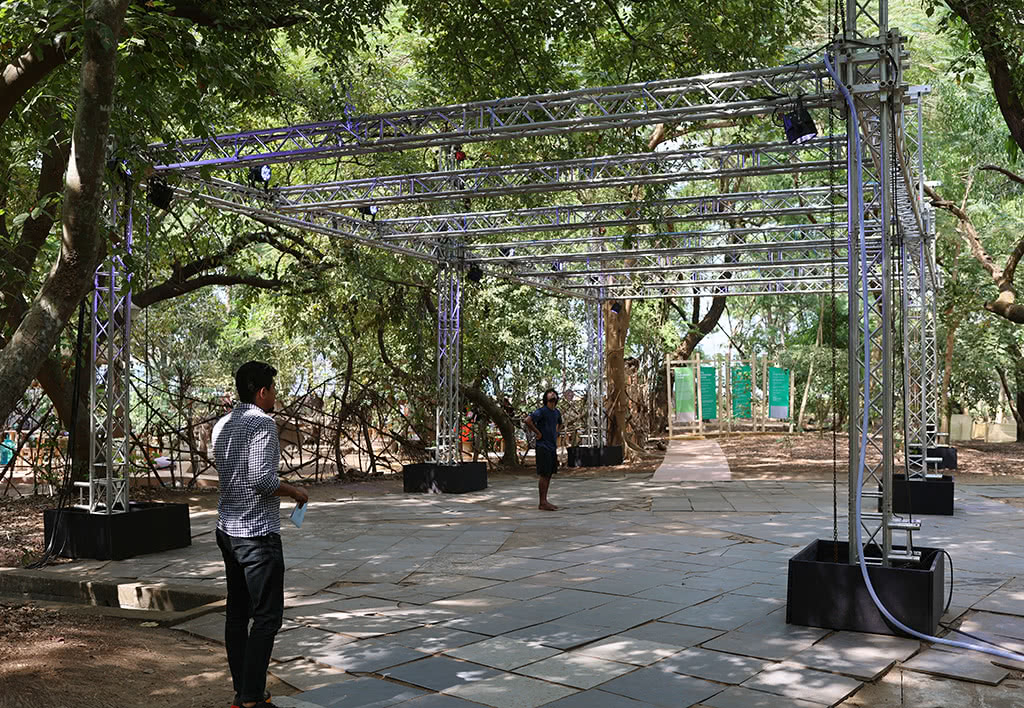
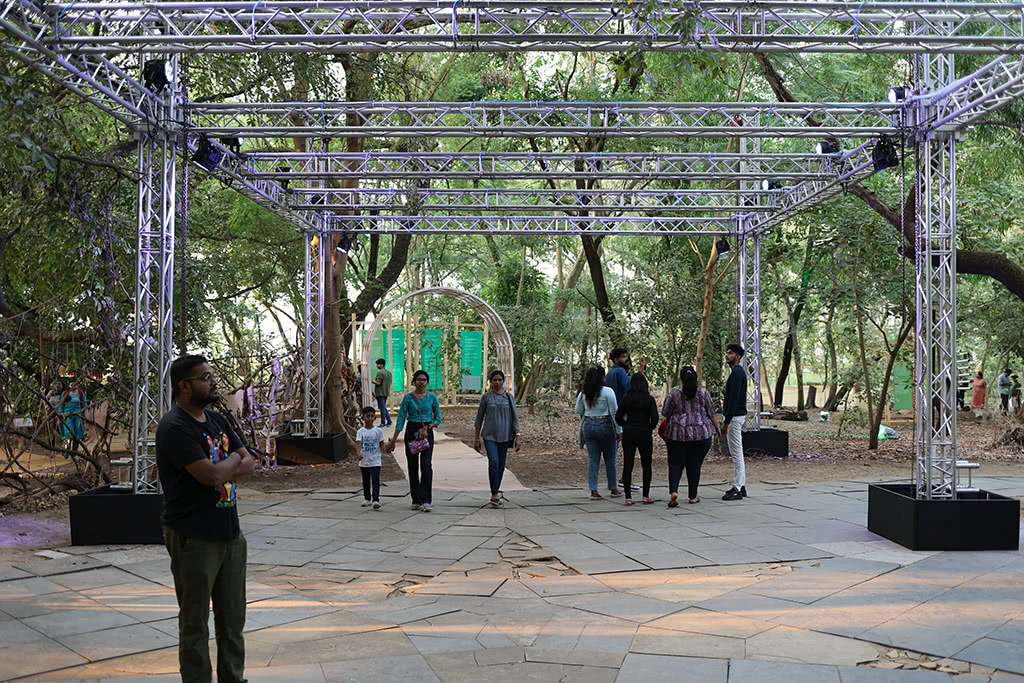
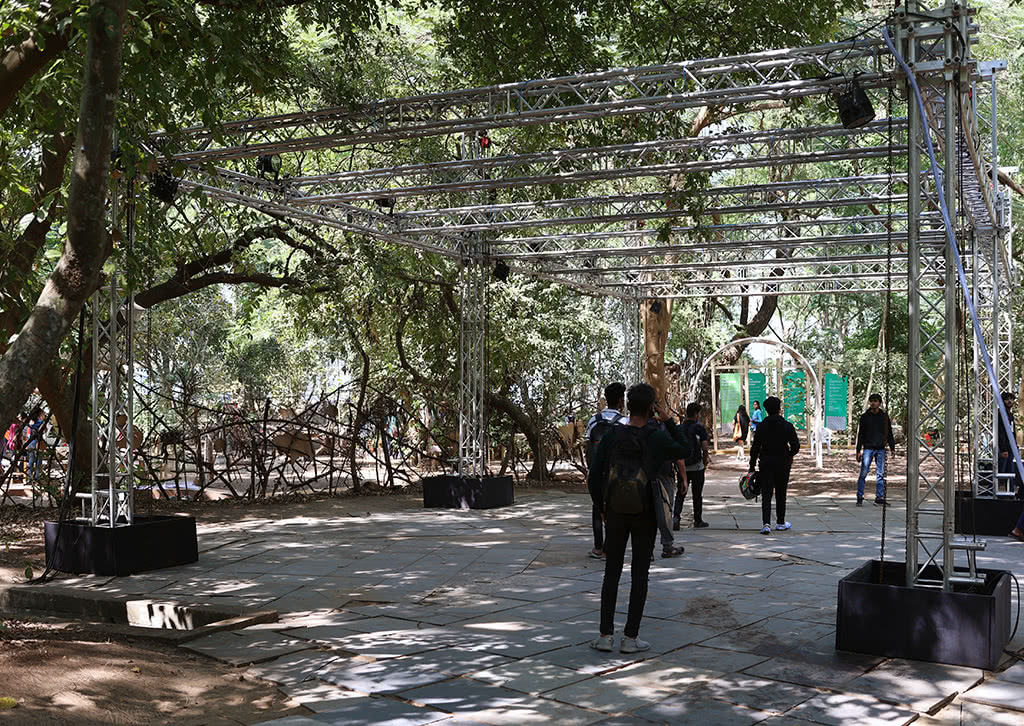
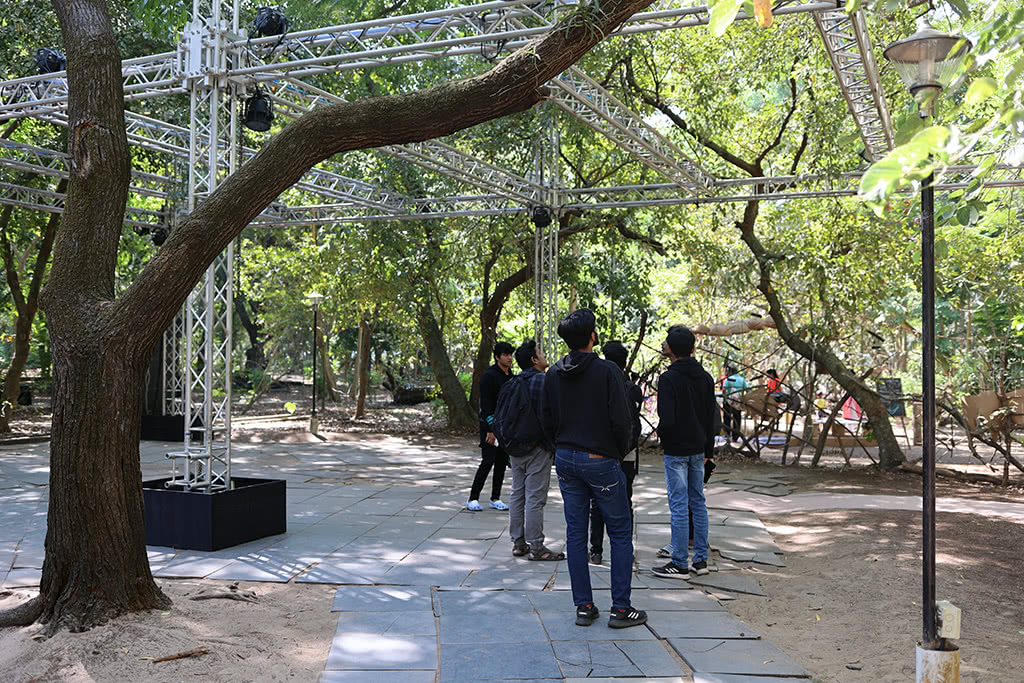
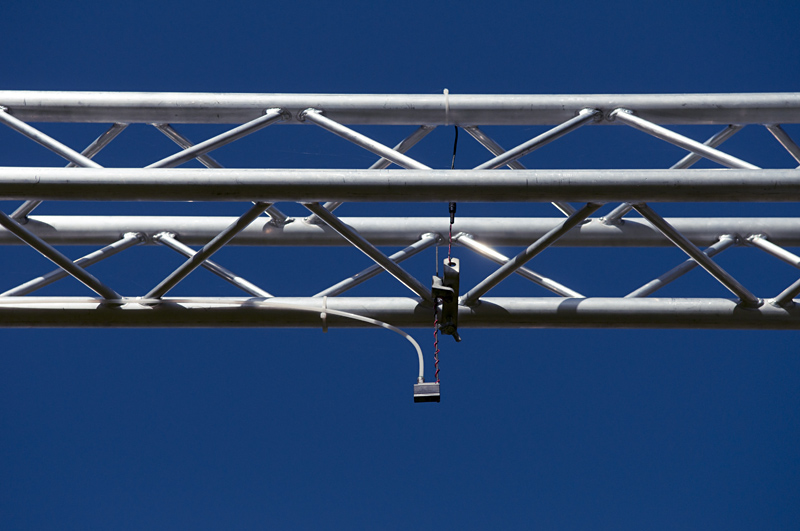
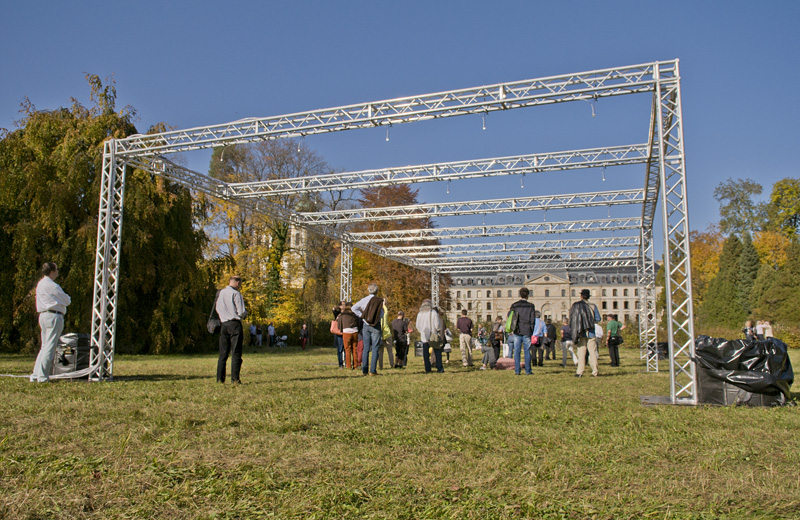
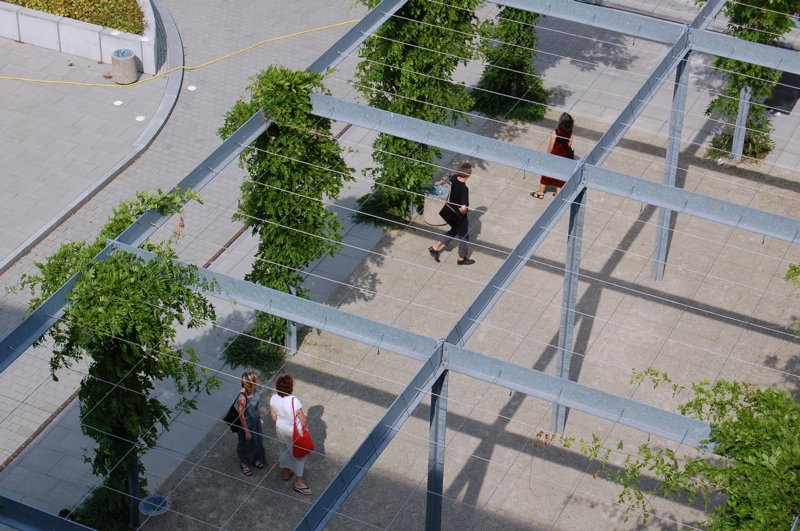
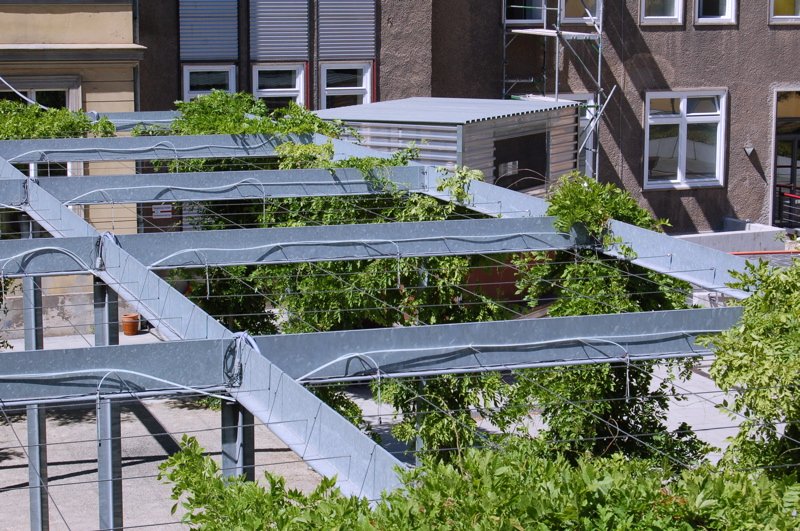
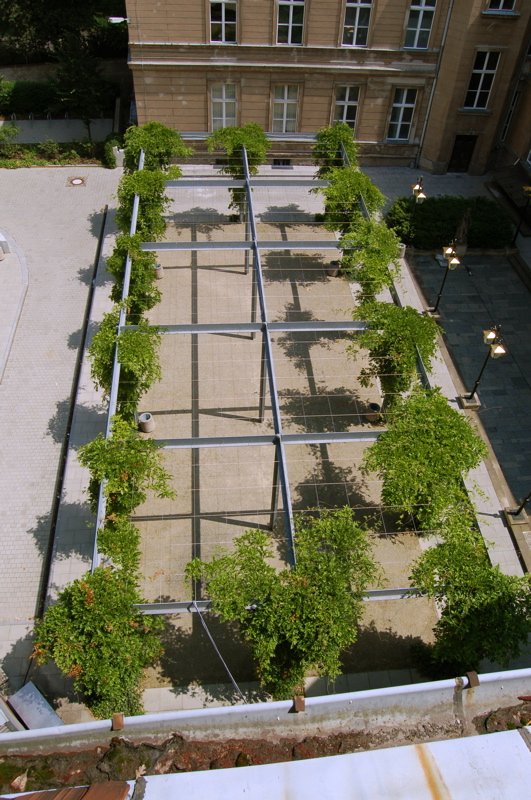
In the installation Pneumatic Sound Field a continuum is being created between rhythmical perception of sound, spatial perception of sound and the perception of pitch. A horizontal plane of pneumatic valves is used to produce wind, pressure and sound. The result is a breathing sound environment above the audience.
Acoustical sound consists of temporary pressure changes traveling through the atmosphere of the air around us. While loudspeakers most often use moving membranes in order to produce these pressure changes in Pneumatic Sound Field compressed air is being used to produce acoustical sound. The compressed air is connected to very fast controllable pneumatic valves that release the pressurized air in the 'open' air. This results in controlled pressure changes in the atmosphere around the valve. Because the compressed air has always a higher pressure than the atmosphere not only sound is being produced but also a bit of wind and noise. The result can be seen as wind that contains sound.
Pneumatic Sound Field makes use of discrete valves that have only two states: open or closed. Therefore each valve forms a 1-bit audio sound source in a 42 channel 1-bit music composition. In contrast, the installation Schwingungen – Schwebungen makes use of proportional valves that allow for continuous pressure variations.
Our hearing has just as our seeing a change in perception around the frequency range of 16 to 20
Hertz. A sequence of film frames is being perceived by us as something happening in time in
stead of individual frames with jumps in between when the frame rate is higher than about 16
frames per second. The same counts for our hearing. Repeating vibrations with a repetition
frequency higher than 16 Hz are being perceived as tones while at a lower repetition frequency
they are being perceived as individual pulses.
The spatial perception of the location of a sound source is partly determined by the difference
in arrival time of the source at the left ear and the source at the right ear. This technique is
often reversely applied in stereo reproduction where a mono sound is played little earlier out
of the left speaker then the right speaker (or reversely) in order to spatialize the sound at
any location between the two loudspeakers.
Pneumatic Sound Field uses spatial time delays of impulses over the 42 valves. By using
different speeds, delays and repetitions a continuum is being created between spatial rhythmical
patterns, spatial localization of sound, movement of sound and the perception of tones and
pitches.
Pneumatic Sound Field was developed by Edwin van der Heide during a project residency at tesla-berlin e.v. and premiered at sonambiente 2006.
 |
Edwin van der Heide
DOI: 10.5040/9781501338786.ch-025 chapter in: Michael Bull and Marcel Cobussen (eds) Bloomsbury Handbook of Sonic Methodologies, 2020 |
| concept, realization: | Edwin van der Heide |
| production: | Pneumatic Sound Field has been realised in the context of a Tesla Berlin e.v. residency and premiered as part of sonambiente 2006 |
| production assistant: | Eckehard Güther |
| audio rate valve control interface: | Sukandar Kartadinata |
| keywords: | pneumatic sound, sound art, new media art, generative art, music, composition, sonic architecture, 1-bit, one bit music, spatial sound, installation, immersive environment, computer music |
Live binaural microphone recording made during the exhibition at the Donaueschinger Musiktage, Donaueschingen, Germany, 2012. The recording contains one of the three parts that were presented. The recording is meant to be listened to on (high quality) headphones. Duration: 6 minutes and 22 seconds. © Edwin van der Heide



| concept, realization: | Edwin van der Heide |
| production: | Pneumatic Sound Field has been realised in the context of a Tesla Berlin e.v. residency and premiered as part of sonambiente 2006 |
| production assistant: | Eckehard Güther |
| audio rate valve control interface: | Sukandar Kartadinata |
| keywords: | pneumatic sound, sound art, new media art, generative art, music, composition, sonic architecture, 1-bit, one bit music, spatial sound, installation, immersive environment, computer music |